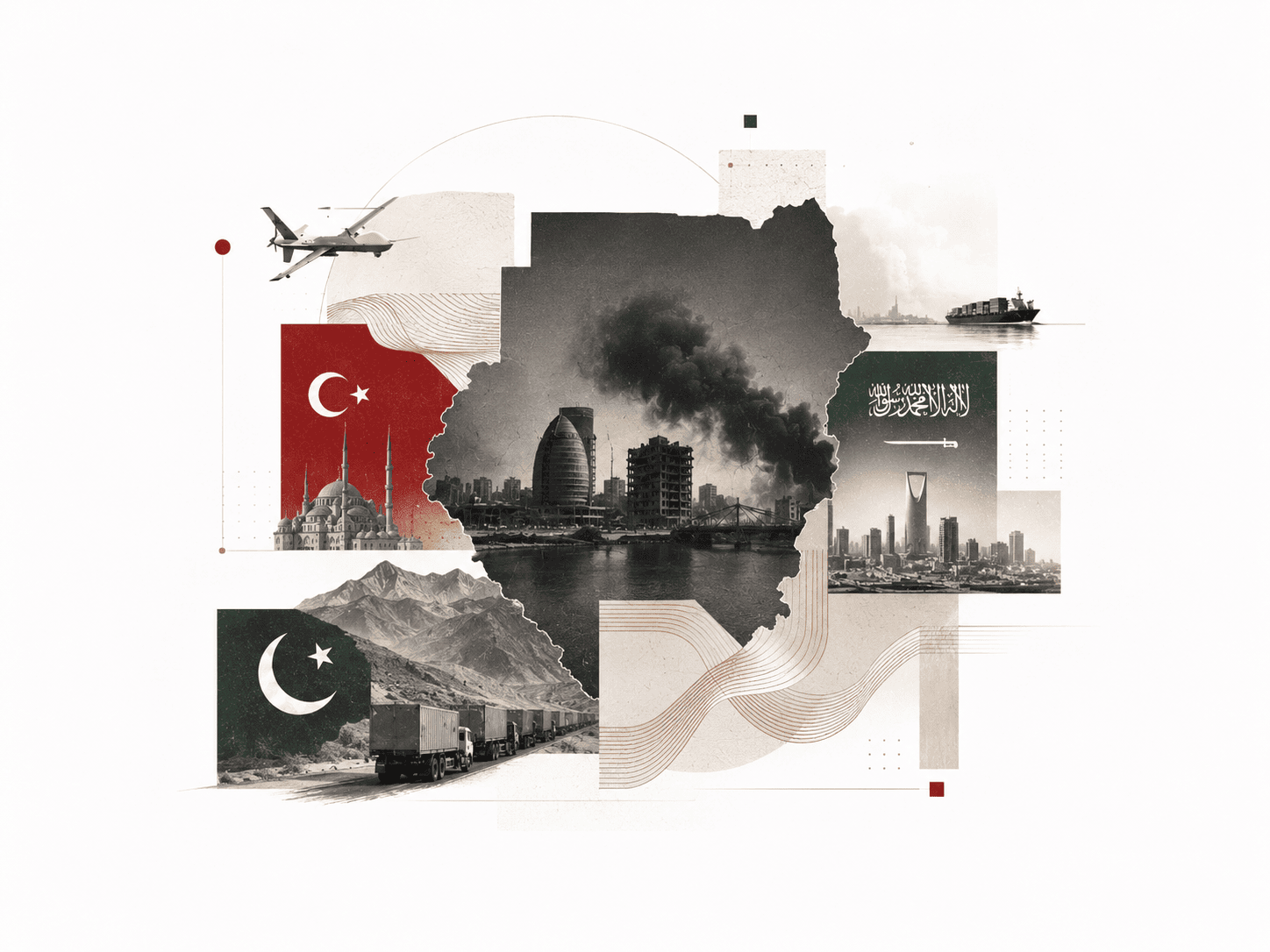
Sudan has been at war since April 2023, with two principal forces competing for control: the Sudanese Armed Forces (SAF), led by General Abdel Fattah al-Burhan, and the paramilitary Rapid Support Forces (RSF), commanded by Mohamed Hamdan Dagalo, widely known as Hemedti. The army now controls Khartoum and much of the country’s north, east and centre, while the RSF retains a strong presence in Darfur and other western regions. The conflict has displaced millions of people and effectively divided Sudan into two competing spheres of influence.
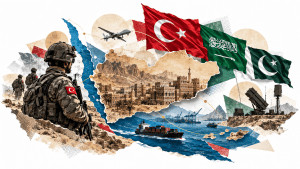
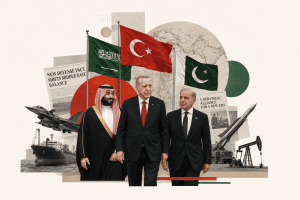
It is against this backdrop that the Mecca Agreement acquires particular significance. The agreement does not formally extend to Sudan, which is not a member of the trilateral alliance. Nevertheless, in an analysis published on 26 August, Le Monde described the Sudanese war as “the first front of the Mecca Pact”. According to the newspaper, Saudi Arabia, Türkiye and Pakistan have recently stepped up their support for the forces aligned with Burhan. Riyadh is reportedly financing the procurement of Turkish-made drones and Pakistani weapons for the Sudanese army.
For Saudi Arabia, this would represent a significant shift in policy. During the early stages of the conflict, Riyadh sought to mediate between the warring parties. As recently as April, Reuters reported that Saudi Arabia had withdrawn from financing a Pakistan–Sudan arms deal worth approximately $1.5 billion. If Le Monde’s latest reporting is accurate, Saudi policy has undergone a substantial realignment within only a few months. The establishment of a new Saudi–Sudanese Coordination Council on 17 August further illustrates the political dimension of this rapprochement.
Sudan’s Strategic Importance to Türkiye
Türkiye’s interest in Sudan long predates the current war. Ankara was among the first governments to recognise Sudan following its independence in 1956 and opened its embassy in Khartoum the following year. During President Recep Tayyip Erdoğan’s visit to Sudan in 2017, the two countries established a High-Level Strategic Cooperation Council and signed a series of agreements covering agriculture, energy, healthcare and defence. Bilateral trade amounted to approximately $345 million in 2024.
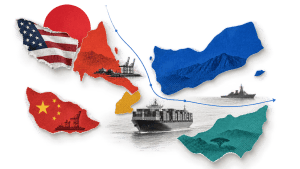
Sudan’s importance to Türkiye, however, extends well beyond economics. Its position on the Red Sea gives the country considerable strategic value. Viewed in the context of Türkiye’s expanding presence in East Africa and the Horn of Africa, Sudan forms part of a broader geopolitical corridor stretching from Somalia to the Red Sea and onward to the Gulf. Ankara’s agreement in 2017 to restore the historic port of Suakin on Sudan’s Red Sea coast became one of the most visible symbols of this strategic interest.
Contacts between Burhan and Ankara have also continued. In June, President Erdoğan received the Sudanese leader in Ankara. Following the meeting, Türkiye reiterated its commitment to ending the bloodshed in Sudan, while announcing that the two sides had discussed expanding cooperation in trade, agriculture, energy and, in particular, defence.
For Saudi Arabia, Sudan’s importance is directly tied to the security of the Red Sea. Riyadh is seeking both to safeguard its major tourism and infrastructure projects along the Saudi coast and to curb the United Arab Emirates’ growing regional influence. The UAE has long been accused of providing the RSF with weapons and financial assistance, allegations that Abu Dhabi denies.
Pakistan’s role is primarily military. Islamabad does not have geopolitical interests in Sudan comparable to those of Ankara or Riyadh. Yet its substantial defence industry and close military relationship with Saudi Arabia could make it a key link in the supply of weapons to the Sudanese army. Sudan could therefore bring together the three complementary pillars of the Mecca Agreement: Saudi financing, Turkish defence technology and Pakistani military capacity.
In the short term, coordinated support from the three countries could strengthen the Sudanese army’s position and help prevent the country’s complete fragmentation. But it also carries a significant risk. If a Türkiye–Saudi Arabia–Pakistan-backed government in Khartoum confronts an RSF that continues to receive external assistance, the war may not move closer to resolution. Instead, it could develop into a broader regional proxy conflict.
The real test of the Mecca Agreement in Sudan will therefore not be how many weapons the three countries can provide to Burhan, but whether they can translate their military influence into a viable political settlement. If Saudi financial leverage, Türkiye’s close ties with Khartoum and Pakistan’s military channels can be brought together to secure a ceasefire and establish a credible political transition, the Mecca Agreement could demonstrate for the first time that it is more than a collective defence pact: it could emerge as a regional centre of power capable of managing complex crises.
Sudan, however, is likely to be only the beginning. As Le Monde also observes, the same struggle for influence is already extending into Somalia, Somaliland and the Bab el-Mandeb corridor. Across a Red Sea region where Türkiye and Saudi Arabia increasingly confront the growing influence of the UAE and Israel, the Mecca Agreement’s next test may unfold across a theatre far wider, and potentially far more volatile, than Sudan itself.