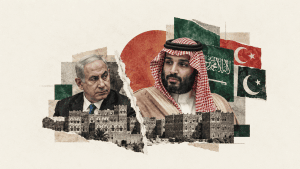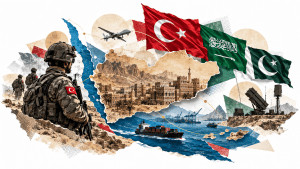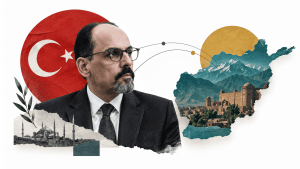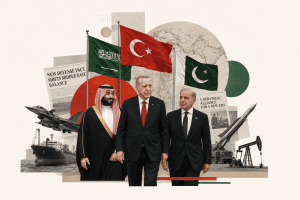
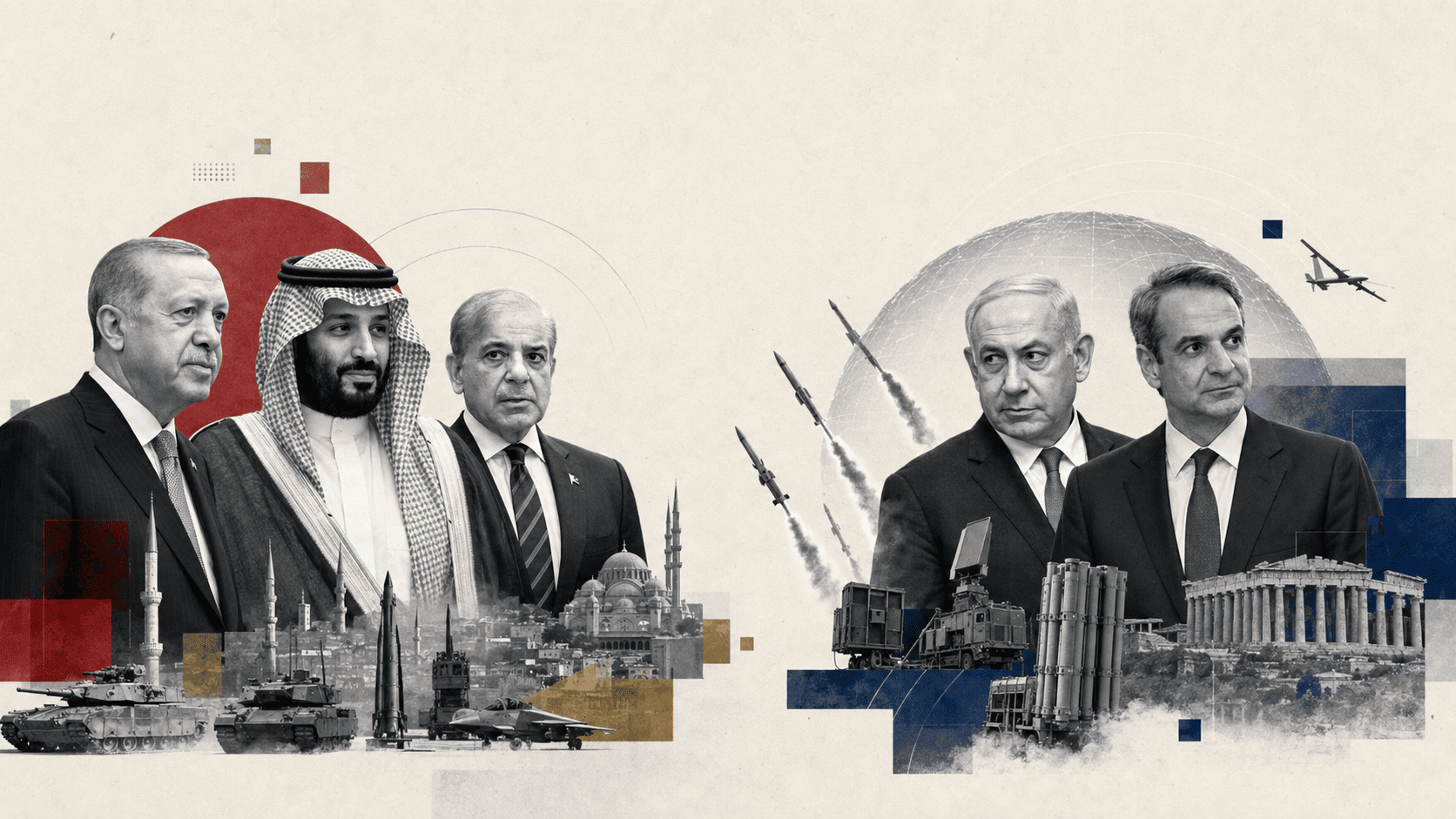
The foreign and defence ministers of Türkiye, Saudi Arabia and Pakistan, together with their chiefs of general staff, met in Istanbul on 31 August for the first high-level gathering under the Mecca Joint Defence Agreement. The meeting marked the first concrete indication that the accord, signed on 7 August, would not remain a mere declaration of political solidarity.
The agreement’s most consequential provision stipulates that an armed attack against any one of the three countries will be regarded as an attack against them all. Echoing NATO’s collective-defence principle, this clause seeks to link the security of Türkiye, Saudi Arabia and Pakistan within a common framework of deterrence.
At the Istanbul meeting, the three countries agreed to establish a permanent secretariat in Saudi Arabia. Its first secretary-general will be appointed by Pakistan for a three-year term. The partners also committed to conducting joint military activities, improving interoperability among their armed forces, developing defence technologies and pursuing joint production. Türkiye’s defence-industrial capabilities, Pakistan’s military power and Saudi Arabia’s financial resources are thus beginning to converge under a single institutional framework.
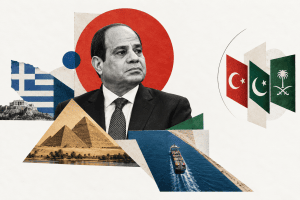
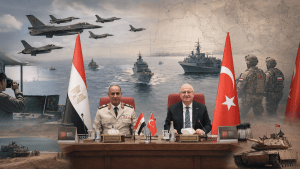
There are also growing indications that the alliance may expand beyond its three founding members. According to Bloomberg, Pakistan has said that six or seven Muslim-majority countries are interested in joining the Mecca Alliance. Although their names have not yet been officially disclosed, Bangladesh has expressed a positive view of possible membership, while Egypt has also been mentioned as a potential candidate.
This is a significant development. If it expands, the Mecca Alliance could evolve from a trilateral defence agreement into the Islamic world’s first effective collective-security mechanism.
The Israel–Greece Axis Deepens
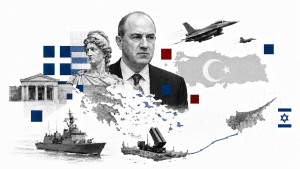
On the same day as the Istanbul meeting, Israel and Greece signed a defence agreement worth approximately €3 billion. The French press described it as one of the largest arms deals in Israel’s history. Under the project, known as the Achilles Shield, Israel will build a multilayered air-defence system for Greece capable of countering ballistic missiles, aircraft and unmanned aerial vehicles.
The agreement covers David’s Sling, SPYDER and BARAK MX systems, along with advanced radar platforms and a national command-and-control network designed to integrate Greece’s air defences. Israel will also transfer technology and technical expertise to Greece. Athens is therefore placing the backbone of its air-defence architecture in Israeli hands for years to come.
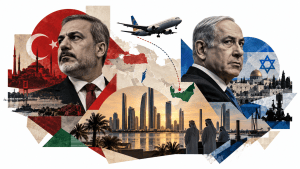
The steps taken in Istanbul and Tel Aviv on the same day reveal the scale of the strategic transformation and competition now unfolding across the region.
On one side, Türkiye, Pakistan and Saudi Arabia are seeking to reduce their dependence on external powers by pooling their defence capabilities. On the other, Israel and Greece are becoming increasingly integrated in military and technological terms across the Eastern Mediterranean. The emerging contest is therefore no longer taking place solely between individual states, but between competing security alignments.
The regional balance will ultimately be shaped not simply by the side that acquires the most advanced weapons, but by the one capable of transforming its economic, military and technological assets into a coherent common strategy. The Israel–Greece axis is building a formidable military partnership, but the Mecca Alliance possesses significantly broader potential.
If Türkiye’s defence industry, Pakistan’s military strength and nuclear deterrent, and Saudi Arabia’s financial power are combined with the capabilities of new members, the result could be a regional alliance whose reach and strategic weight far exceed those of the Israel–Greece axis.
In the longer term, it may therefore be the expanding Mecca Alliance, not the Achilles Shield, that proves most capable of redefining the region’s balance of power.