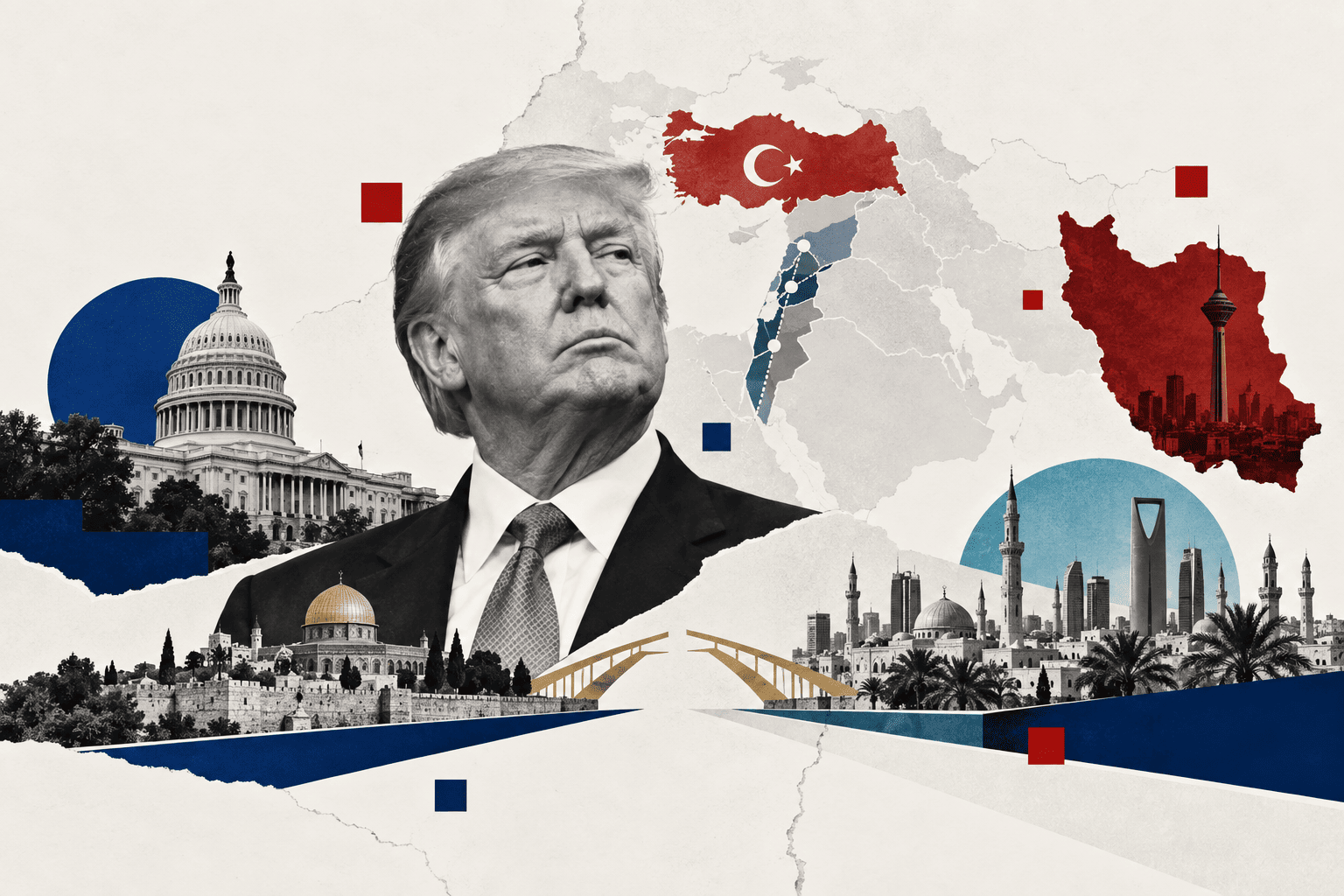
According to Axios, citing US officials and sources familiar with the discussions, the Trump administration is drafting a comprehensive strategy for the Middle East following the war with Iran. Although still at an early stage, the plan is intended to guide US policy in the region throughout the final two years of Trump’s term. The president has reportedly held at least two meetings with senior advisers in recent weeks and privately said that he is working on “something much bigger” in the Middle East.
The first pillar of the plan is to curb Iran’s regional influence. Washington hopes to bring Israel and its Arab allies into a closer security framework under US guarantees. Rather than relying solely on Israel to deter Iran, the objective is to build a broader front in which America’s regional partners share responsibility.
The second pillar is an attempt to bring the chain of conflicts triggered by the attacks of 7 October 2023 to a close. Washington wants to advance the next phase of its Gaza plan, secure a security agreement between Israel and Syria, and implement the Israel-Lebanon agreement. In other words, the United States intends to address the crises in Gaza, Syria and Lebanon not as separate issues, but as interconnected parts of a new regional order.
Yet this objective will be difficult to achieve without a lasting political settlement in Gaza. Fundamental questions remain unresolved, including the future of the Palestinians, the governance of Gaza, the disarmament of Hamas and the continued presence of Israeli forces. Unless a credible path towards Palestinian statehood is established, ending the fighting will not necessarily bring the wider regional crisis to an end.
The third pillar is the expansion of the Abraham Accords. Trump’s immediate priority is to broker the establishment of diplomatic relations between Saudi Arabia and Israel.
Riyadh, however, maintains that normalization cannot take place without a concrete and credible path towards Palestinian statehood. The Trump administration, for its part, has made the civilian nuclear cooperation sought by Saudi Arabia conditional on the kingdom joining the Abraham Accords. This exposes a fundamental contradiction at the heart of the plan: Washington wants to integrate Israel fully into the region without first resolving the Palestinian question.
The Plan Cannot Succeed Without Türkiye
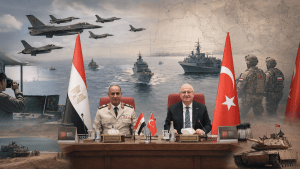
Türkiye’s role is not clearly defined in the draft described by Axios. Nevertheless, Ankara is present in virtually every issue the plan seeks to address. Türkiye cannot simply be left out, given its military and political influence in Syria, its role in Gaza diplomacy, its NATO membership, its defence capabilities and its deepening ties with the Gulf states.
Syria could become the most tangible area of Turkish-American cooperation. Ankara and Washington both support the establishment of a stable, centralized government in Damascus. Yet Türkiye’s growing military and political presence in the country is generating a serious sense of threat in Israel. US efforts to establish a deconfliction mechanism involving Türkiye, Israel and Syria show that this rivalry has become a security challenge requiring direct management.
In Gaza, Türkiye supports Trump’s ceasefire and reconstruction initiatives while opposing the displacement of Palestinians and any attempt to eliminate the prospect of Palestinian statehood. Ankara’s channels of communication with Hamas and its relations with Arab governments provide Washington with valuable diplomatic leverage. Türkiye could therefore both facilitate the implementation of the American plan and help balance its approach to the Palestinian question.
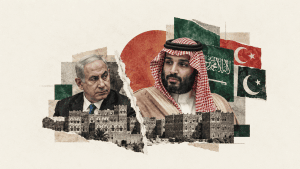
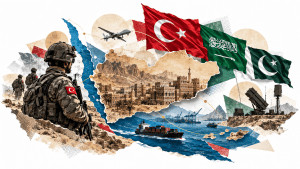
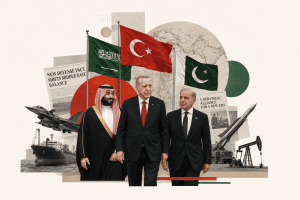
At the same time, Türkiye no longer operates solely as a NATO ally within the US-led security system. The Mecca Joint Defence Agreement signed with Saudi Arabia and Pakistan demonstrates Ankara’s determination to build regional partnerships of its own. The three countries’ decision to establish a joint secretariat suggests that the initiative could develop into more than a symbolic political declaration.
This creates both an opportunity and a challenge for Trump’s strategy. Defence cooperation between Türkiye, Saudi Arabia and Pakistan could indirectly contribute to containing Iran. But the same grouping could also evolve into an autonomous security axis pursuing its own priorities rather than fully aligning itself with an Israel-centred American order.
The project Trump has described as “much bigger” is therefore not merely a plan to weaken Iran. Its broader objective is to transform the power vacuum created by the war into a new order in which the United States bears fewer costs, Israel becomes more deeply integrated into the region and Washington’s partners assume greater responsibility for regional security.
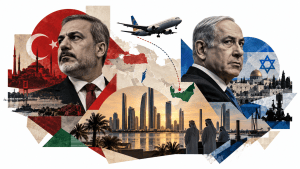
Türkiye, however, will not want to serve as a supporting actor to Israel within this system. It will seek a place of its own as an independent regional power. Ultimately, the success of Trump’s plan will depend not only on how far Iran has been weakened, but also on whether Washington can manage the increasingly intense rivalry between Türkiye and Israel.