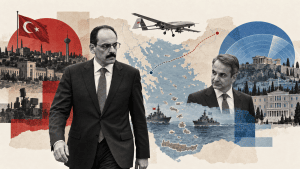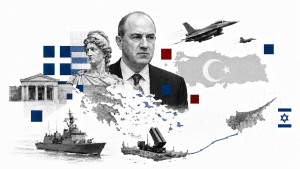
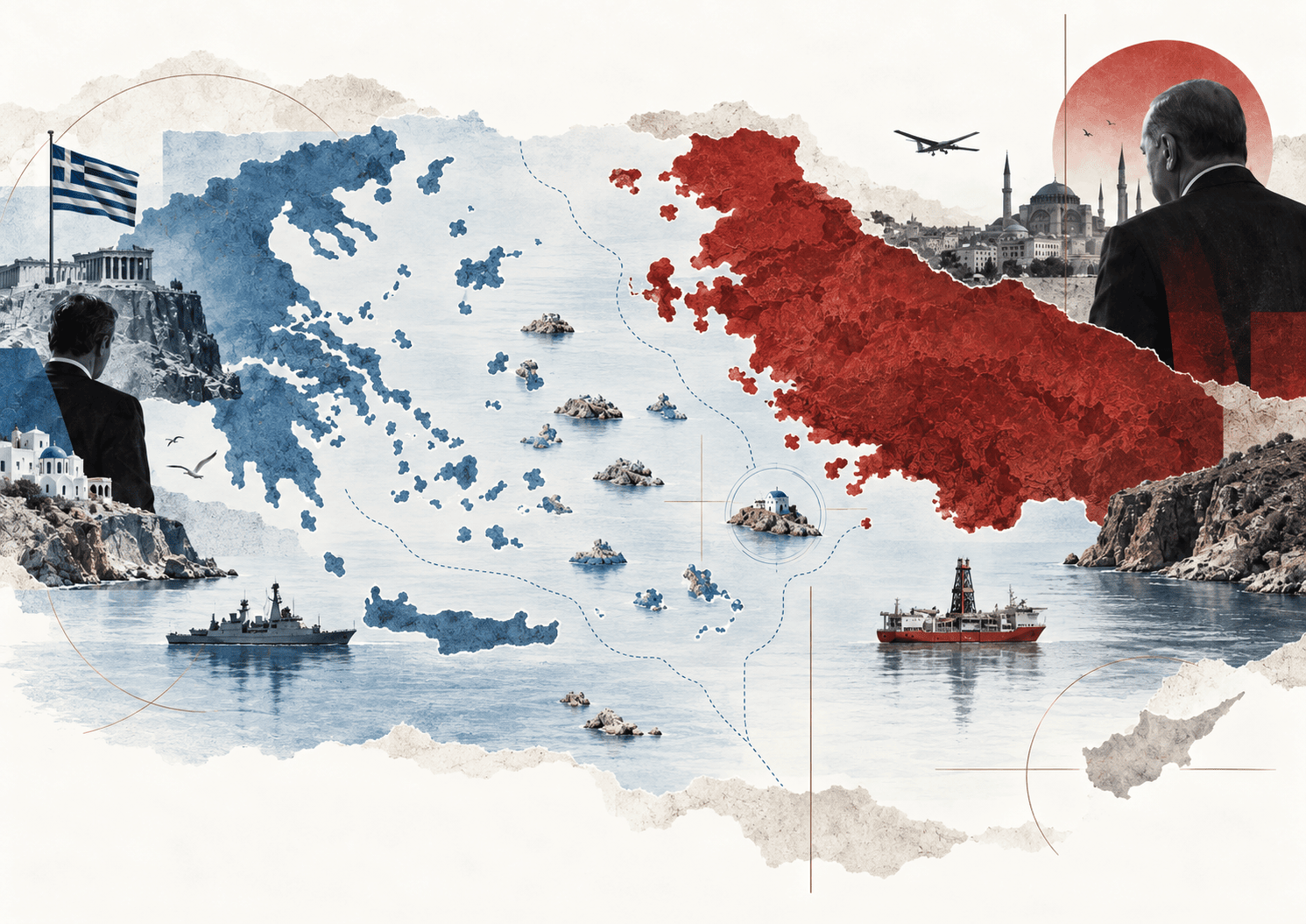
Greek Prime Minister Kyriakos Mitsotakis’s visits to Kastellorizo, Ro and Strongyli were more than symbolic. From Kastellorizo, just off the Turkish coast, his emphasis on “sovereignty”, “Europe’s eastern frontier” and his refusal to “accept threats” amounted to a direct political message to Ankara.
Kastellorizo is one of the most sensitive points in the disputes between Türkiye and Greece. Whether such a small island, located only a few kilometres from Anatolia, can generate an extensive maritime jurisdiction zone in the Eastern Mediterranean lies at the heart of the disagreement between the two countries. Mitsotakis’s decision to place particular emphasis on Kastellorizo therefore reflects Athens’s effort to reinforce its claims not only through diplomatic rhetoric, but also through its political and military presence on the ground.
Defence Minister Nikos Dendias’s subsequent message on 1922 belongs to the same political context. Greece is increasingly framing what Türkiye regards as the victorious phase of its War of Independence through its own national narrative of the “Asia Minor Catastrophe” and “genocide”.
History is thus becoming another instrument in today’s geopolitical competition.
Athens Is Not Seeking War, but Greater Room for Manoeuvre Against Türkiye
One distinction is essential: Greece is not seeking a war with Türkiye. A direct military confrontation with Türkiye would, in any case, hardly be a realistic option for Athens.
Türkiye’s strategic weight in the region rests not only on its population, economy and geography, but also on large and operationally experienced armed forces, a rapidly expanding defence industry, significant naval capabilities and the level it has reached in unmanned systems. Ankara is also a player with direct influence across multiple theatres, from NATO and the Black Sea to the Caucasus, the Middle East and the Eastern Mediterranean.
Its diplomatic reach is just as difficult for Greece to ignore. Ankara is one of the few regional powers capable of maintaining relations, at different levels and often simultaneously, with Europe, the United States, Russia, the Gulf states, the Turkic world, Africa and the Middle East. Athens’s strategy, therefore, is not to confront Türkiye militarily, but to narrow Ankara’s room for manoeuvre as much as possible without triggering a direct clash.
Marine parks, maritime spatial planning, energy projects, closer cooperation with Israel and the Greek Cypriot Administration, defence investments and a stronger military presence on the islands are all parts of this broader strategy.
Athens continues to promote the policy of “calm waters” while at the same time taking new steps in areas where Türkiye has raised objections. The objective is to gradually normalise Greek positions in the eyes of the international community and keep Ankara in the role of the actor forced to respond to each new move.
Yet Athens faces a clear limit: Türkiye is not a country that accepts faits accomplis.
In recent years, Ankara has already built its own regional strategic space, from the Blue Homeland doctrine and maritime jurisdiction claims to its strategic relationship with Libya and the transformation of its navy and defence industry. In the Aegean and Eastern Mediterranean, Türkiye is no longer merely responding to Greek initiatives; it is itself shaping the balance on the ground.
In short, Athens may seek to expand its room for manoeuvre. But no lasting order in the Aegean or Eastern Mediterranean can be built by excluding Türkiye’s military, diplomatic and geopolitical weight.