
The death of U.S. Republican Senator Lindsey Graham at the age of 71, reportedly after a “brief and unexpected illness,” landed like a bombshell on the world agenda. While Graham’s office did not issue a detailed statement on the cause of death, some American media outlets reported that emergency crews were dispatched to the senator’s home in Washington after a cardiac arrest call. However, the definitive cause of death has not yet been shared with the public.
Graham was never President of the United States. Even so, he was one of the most important figures capable of influencing the balance of power in Washington, war policies, and foreign policy decisions. During a career in Congress spanning more than three decades, he stood out not merely as a senator, but as an influential actor with strong ties to the American security bureaucracy, defense circles, and the foreign policy establishment.
The sudden death of Graham, who had appeared to be in very good health in public only a few days earlier, quickly sparked intense debate because of his influence in Washington, the critical contacts he had recently held, and the timing of his death. Of course, a sudden death cannot be called suspicious on its own. Yet the unexpected death of a politician like Graham, who stood at the center of war, sanctions, and security policies, inevitably brings different scenarios into public discussion.
Graham was known not only for his unconditional support for Israel, but also for his extremely harsh and controversial statements on international crises. He was one of the most hawkish politicians advocating the use of American military power. This stance won him powerful allies, but it also led him to make many enemies in different parts of the world.
The Republican senator had defended Israel’s destructive military methods in Gaza by citing the U.S. atomic bombings of Hiroshima and Nagasaki after the attack on Pearl Harbor, and had argued that Israel might be justified in using force on a scale that could completely eliminate the Gaza Strip.
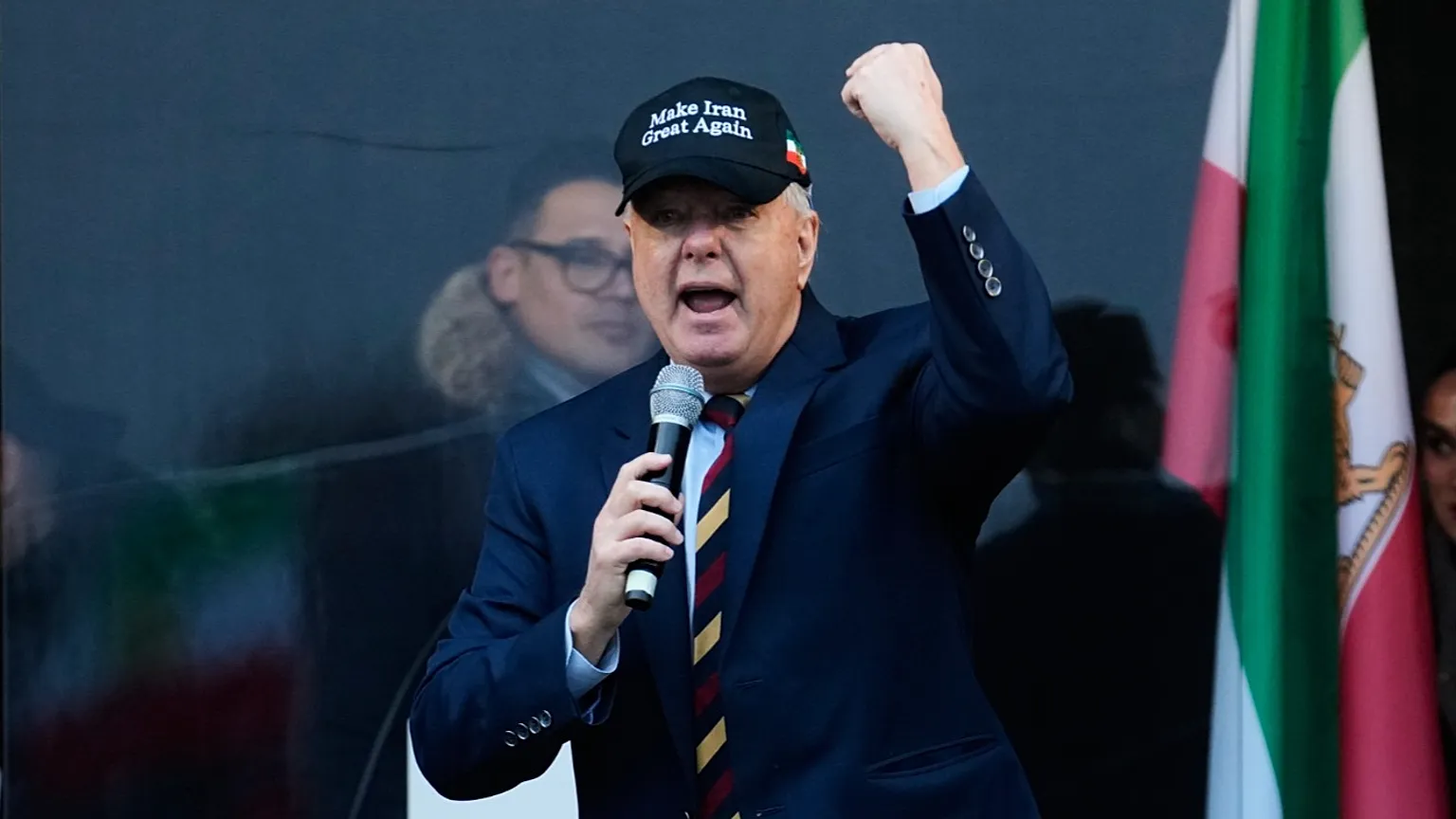
Similarly, Graham, who appeared before cameras wearing a hat reading “Make Iran Great Again” (Make Iran Great Again), had become one of the most fervent advocates of the war option against Iran. He was thought to be among the leading figures pushing the Trump administration toward a harder line on Iran. Graham’s approach was based less on diplomatic solutions than on military pressure, regime change, and sweeping sanctions.
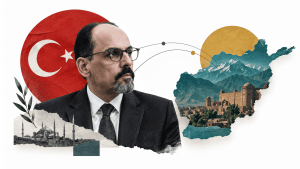
Another defining feature of Graham was that he was one of the harshest voices in American politics toward Türkiye. Earlier in the year, he had objected to possible steps against the YPG in Syria and used language threatening Ankara with sanctions, calling on Türkiye and the Syrian government to “make a wise choice.”
However, just before his death, there was a surprising shift in Graham’s stance on Türkiye.
Graham was part of the American delegation that came to the NATO Summit held in Ankara on July 7–8 together with U.S. President Donald Trump. The senator, who had previously supported defense sanctions against Türkiye, said during the summit that he was ready to support a possible Trump decision to sell F-35s to Türkiye. While acknowledging that objections could arise in Congress, Graham stated that he was open to the possibility of the sale.
This statement did not merely contradict Graham’s past position. It also pointed to an important shift in terms of Israel’s security policy, which strongly opposes the sale of F-35s to Türkiye. The Israeli government argues that Türkiye’s acquisition of F-35s would alter the balance of regional air superiority, and had been exerting heavy pressure on Washington to block the sale.
Another noteworthy development also occurred during the NATO Summit. It was claimed that Israel had passed intelligence to the U.S. suggesting that Iran was preparing a new assassination plot targeting Trump. The fact that Trump boarded a different aircraft when leaving Ankara from the one he had used on arrival was also linked to these claims.
Another important contact that took place just before Graham’s death was his visit to Kyiv. The senator had met Ukrainian President Volodymyr Zelenskyy one day before his death and had just returned to Washington. The meeting addressed military support to be provided to Ukraine, Patriot systems, and sanctions against Russia. It is reported that Graham had no known serious health problems and had planned to appear on television programs after his return.
When all these developments are placed side by side, Graham’s death inevitably raises a number of questions:
Could Graham have been the victim of a power struggle inside Washington? Was he targeted because he had dragged the U.S. into a mistake in its war with Iran? Did Russia take revenge because of his strong support for Ukraine? Did Iran turn, instead of directly targeting Trump, toward one of the most influential figures shaping his war policies?
And perhaps the most striking question from Türkiye’s perspective is this: Did Graham, who had given Israel unconditional support for years, pay the price for his statement opening the door to the sale of F-35s to Türkiye?
Similar claims had also come to the fore after the assassination of American activist Charlie Kirk. It had been alleged that Kirk had made certain criticisms of Israel shortly before his death and had faced pressure from pro-Israel donors.
The truly striking picture is this: figures close to Trump being removed from the scene one after another, politically or physically, and Trump recently putting more distance between himself and Israel while sending warmer messages to Türkiye. This process shows that the power struggle in Washington is becoming increasingly fierce not only between Democrats and Republicans, but also within the Republican Party and the Trump movement itself.
Thus the second major question is this:
Should all these developments be read as a warning to Trump, who has recently moved closer to Türkiye and begun to follow a more independent line in his relations with Israel?