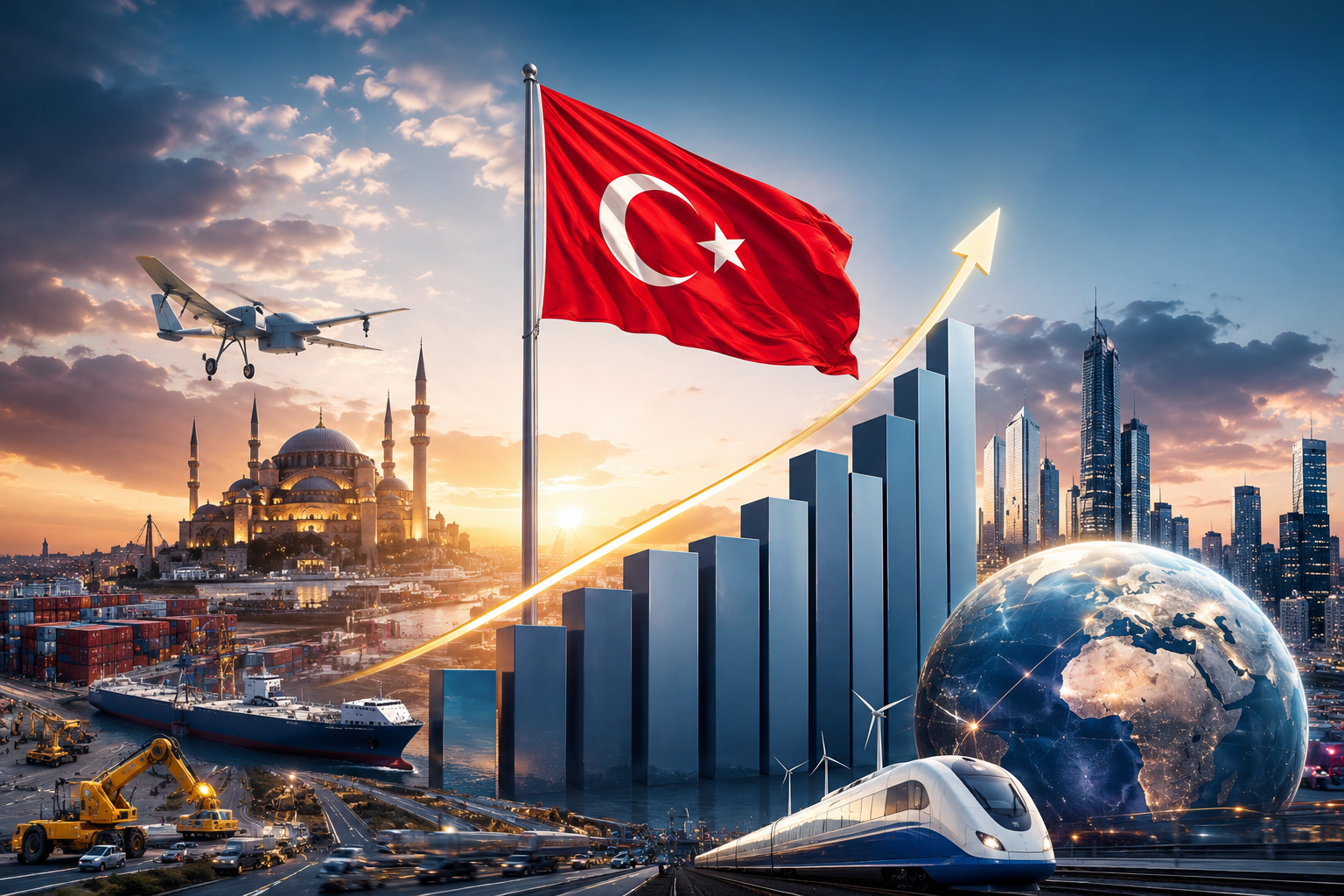
The figures speak for themselves. Türkiye’s nominal GDP is projected to reach $1.64 trillion in 2026, placing it ahead of Indonesia at $1.54 trillion and Saudi Arabia at $1.39 trillion. Beyond these three countries, no other Muslim-majority economy has crossed the trillion-dollar threshold. The United Arab Emirates stands at $622 billion, Malaysia at $516 billion and Bangladesh at $511 billion.
What makes this even more remarkable is the contrast in structural advantages. Indonesia is the world’s fourth most populous country, with nearly 280 million people. Saudi Arabia, meanwhile, possesses some of the largest and most profitable oil reserves on the planet. Türkiye has neither a massive demographic base nor extraordinary underground wealth. Yet it has managed to overtake both.
The explanation lies largely in the evolution of Türkiye’s economic model. Over the past decade, the country has significantly expanded its manufacturing sector, pushed tourism revenues to record levels and diversified its export base. Unlike economies heavily dependent on raw materials, Türkiye is less exposed to swings in global commodity prices. That structural shift took years to materialise in GDP figures, but the results are now becoming impossible to ignore.
Defence, Energy and Diplomacy
To fully understand Türkiye’s new economic status, one must look beyond headline figures. Ankara is simultaneously advancing on three strategic fronts: defence, energy and diplomacy.
The first is the defence industry. In 2025, Baykar broke its own record with $2.2 billion in exports, further cementing its dominance in the global drone market. In a symbolic development, the company recently signed its first export agreement for the Bayraktar KIZILELMA unmanned combat aircraft with Indonesia, the very country Türkiye has now overtaken economically. Overall, Turkish defence and aerospace exports surpassed $10 billion in 2025, nearly double their 2023 level.
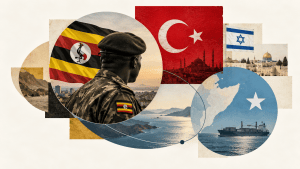
The second front is energy. Türkiye remains structurally dependent on imported energy, and Ankara is actively trying to reduce that vulnerability. The state-owned energy company TPAO continues offshore drilling operations near Somalia. Seismic exploration projects are expected to begin off the Libyan coast in 2026, while new exploration agreements have also been signed in Pakistan for both offshore and onshore fields. At the same time, cooperation deals with major international energy firms such as Exxon, Chevron, BP and Shell have expanded rapidly. This energy diplomacy is about more than access to resources; it is also becoming a tool of geopolitical influence across Africa and the Middle East.
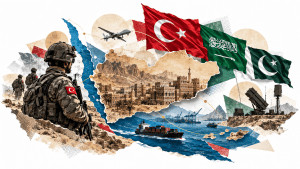
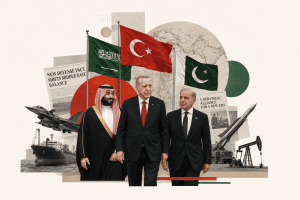
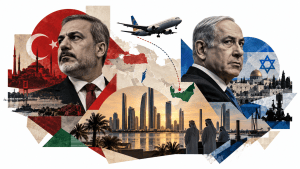
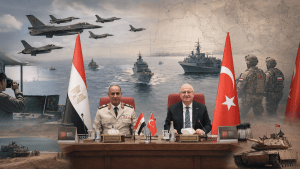
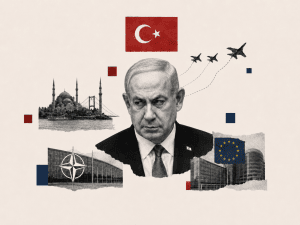
The third dimension is diplomacy. Türkiye is strengthening its position within NATO while simultaneously deepening ties with Saudi Arabia, Egypt and Pakistan. Relations with Gulf capitals are being revitalised, and Ankara continues to expand its military and economic presence across Africa. Holding the title of the Muslim world’s largest economy gives Türkiye considerably greater leverage at all of these negotiating tables.
Türkiye Rises as Europe Slows
The timing of Türkiye’s rise is deeply significant.
It comes as several of Europe’s major economies are struggling with stagnation. Germany, long regarded as the economic engine of Europe, effectively closed 2025 with near-zero growth. High energy costs linked to the war in Ukraine, weakening exports and structural pressures in the automotive sector are all weighing heavily on the German economy.
France faces its own challenges. Despite recording 0.9 per cent growth in 2025, the country continues to run a budget deficit well above EU limits, while public debt is steadily climbing. Moody’s has already revised France’s sovereign outlook to negative.
Against this backdrop, IMF projections point to a broader economic rebalancing. Türkiye now ranks as the world’s 16th largest economy by nominal GDP. More importantly, its projected growth rate remains well above that of several major European economies: 3.4 per cent for Türkiye, compared with 0.8 per cent for Germany, 0.9 per cent for France, 0.5 per cent for Italy and 2.1 per cent for Spain.
Germany and France still remain far larger economies in absolute terms. Yet if current momentum continues, Türkiye could realistically move closer to -and potentially overtake- countries such as Spain, the Netherlands and Italy over the next decade.
What makes Türkiye’s rise particularly notable is that it is increasingly driven by industry, exports and economic diversification rather than by raw materials or demographic weight. That gives its growth a potentially more sustainable foundation. However, the path ahead is far from guaranteed. Inflation, currency volatility and delays in structural reforms could easily undermine this trajectory.
The IMF has already revised Türkiye’s 2026 growth forecast downward from 4.2 per cent to 3.4 per cent, citing volatility in global energy prices. In other words, the picture is not yet settled. But one fact is already clear: Türkiye’s emergence as the largest economy in the Muslim world marks a significant shift in both regional economics and geopolitics.