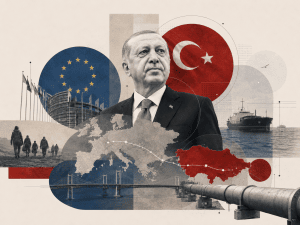
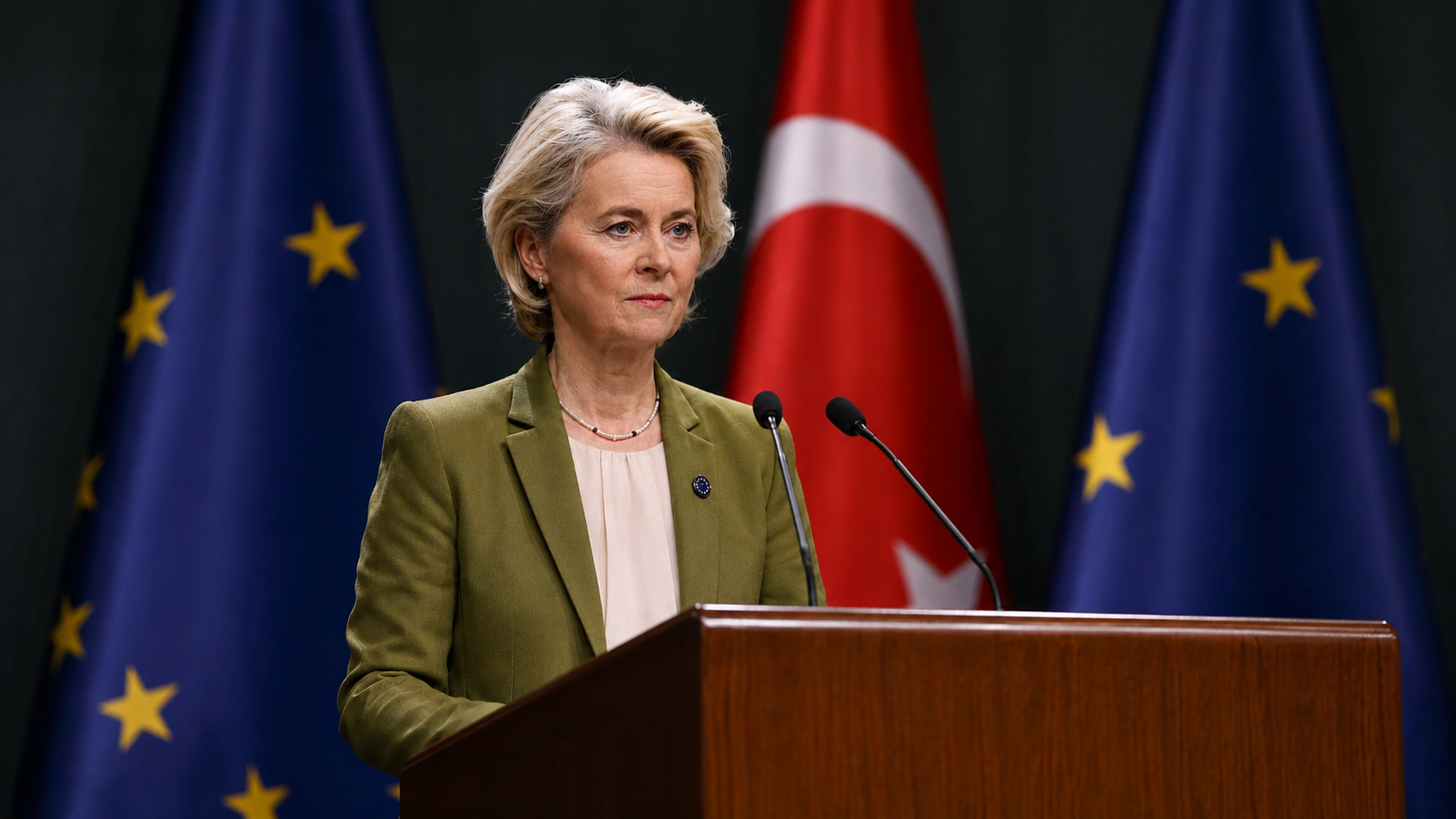
On April 19, 2026, speaking in Hamburg at an event marking the 80th anniversary of the German newspaper Die Zeit, European Commission President Ursula von der Leyen defended the idea of enlarging the European Union to include the Western Balkans, Ukraine and Moldova. She then made the following statement: “We must ensure that the European continent is fully formed, free from Russian, Turkish or Chinese influence.”
Placing a NATO ally, and the EU’s oldest candidate country, whose accession process has been ongoing for more than sixty years, in the same category as Russia and China as an influence to be kept at bay sent shockwaves through diplomatic circles.
AK Party Spokesperson Ömer Çelik described Von der Leyen’s remarks as a “grave intellectual contradiction.” What is striking, however, is that the criticism did not come only from Ankara. Nacho Sánchez Amor, the European Parliament’s rapporteur on Türkiye, described this approach as “geopolitically flawed.” Former European Council President Charles Michel also recalled that Türkiye is a core NATO ally, a key partner in migration management, an important energy corridor and a major regional power, before stating: “Europe will not become stronger by applying double standards or by oversimplifying reality.” Meanwhile, Marta Kos, the EU Commissioner for Enlargement, took the opposite line from Von der Leyen, stressing that Türkiye is an “indispensable” partner and saying: “In light of the realities in Europe and the Middle East, we need Türkiye.”
This contradiction is no coincidence. It clearly shows just how fragmented and inconsistent the EU’s approach toward Türkiye has become.
A Brussels Divided
Von der Leyen’s position reflects a current within the EU that sees Türkiye as a threat or a problem. From this perspective, Türkiye is viewed as a candidate country shaken by democratic backsliding, a neighbor escalating tensions in the Aegean, and an actor that at times takes positions contrary to Western interests.
France is an important part of this picture. Macron’s recent Türkiye-related remarks during his visits to Greece and Armenia show that Paris views Ankara as a rival. This rivalry has become particularly concrete on the African continent: Türkiye’s growing sphere of influence in the Sahel and East Africa is largely being fed by the vacuum created by France’s loss of influence in the region.
On the other hand, another approach is gaining ground within the EU: that of those who see Türkiye as an indispensable partner. In Brussels, the view that relations with Ankara are no longer shaped merely by political preferences, but by strategic necessities, is becoming increasingly prominent. This necessity is visible across several areas: Türkiye’s key role in managing irregular migration, its growing importance for energy security after the war in Ukraine, its weight in the balance of power in the Black Sea, and its expanding defense industry capabilities.
Spain, Italy, Belgium: Concrete Signs of Rapprochement
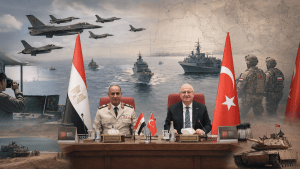
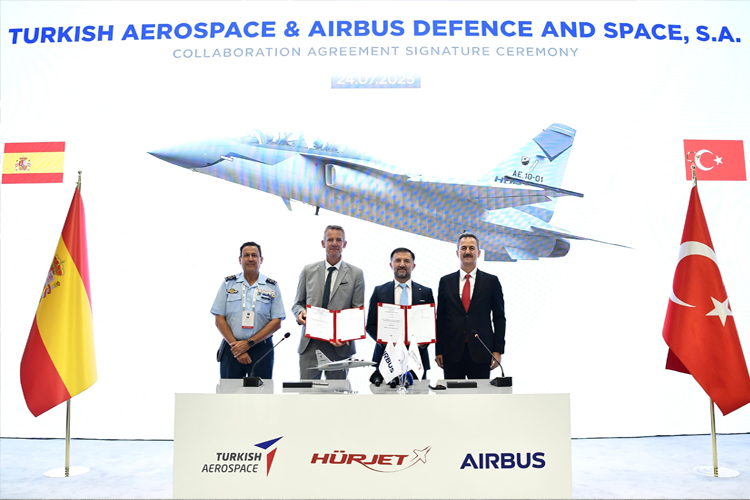
Within the EU, rapprochement with countries that share this approach is not limited to rhetoric. The agreements signed one after another and the ongoing negotiations point to a very concrete picture. Spain is perhaps the most striking example. Türkiye had previously sold 30 HÜRJET aircraft to Spain in a deal worth 2.6 billion euros. But the rapprochement between the two countries did not stop there. At SAHA 2026, Turkish Aerospace CEO Mehmet Demiroğlu announced that they had received a request from the Spanish Air Force for a fifth-generation fighter jet, confirming that preliminary intergovernmental talks on KAAN were under way. For Spain, which has postponed the F-35 program and faced difficulties within the FCAS project, KAAN is becoming a serious alternative. The talks are taking shape around a co-production model that would also involve Spanish companies.
On the Italian front, the transformation is even deeper. During President Erdoğan’s visit to Rome in April 2025, the strategic partnership agreement between Baykar and the Italian defense giant Leonardo was formally presented in the presence of Prime Minister Giorgia Meloni. Under the agreement, the two companies will jointly produce armed unmanned aerial vehicles in Italy. The cooperation goes beyond drone technologies and also covers artificial intelligence, C4I systems and space. The Baykar-Leonardo partnership is only one dimension of this relationship.
According to Bloomberg, Türkiye is also in talks with Italy over the acquisition and co-production of SAMP/T systems in order to strengthen its air defense capabilities against the growing missile threats in the region. This process, previously suspended due to French objections, has been revived thanks in part to the positive momentum in Türkiye-Italy relations. Defense cooperation between the two countries is no longer based on a single platform, but on several interconnected programs.
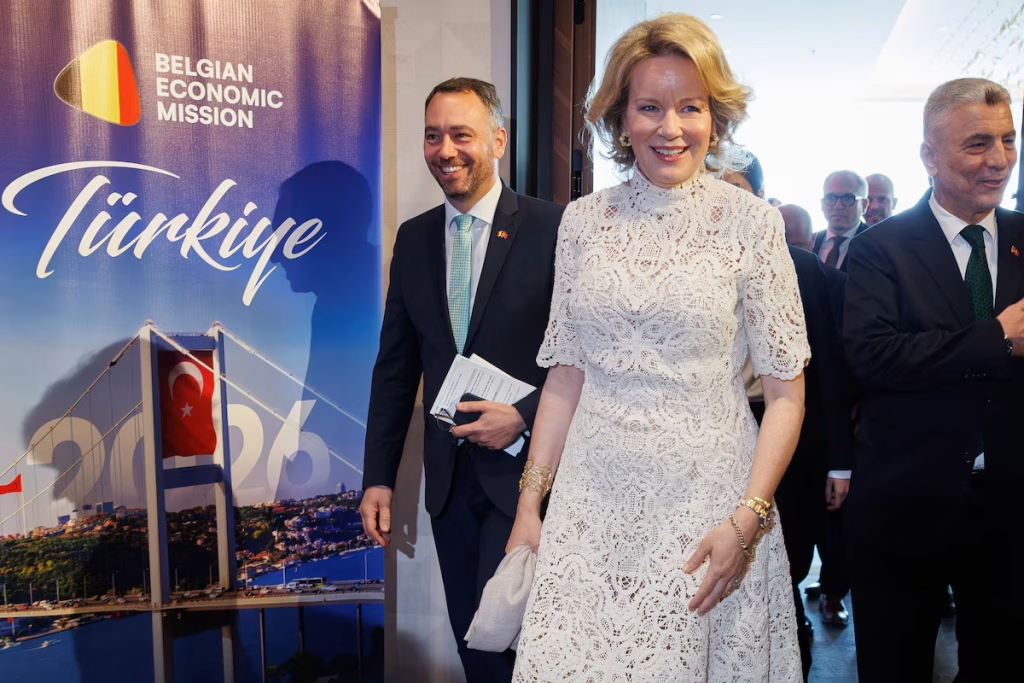
Belgium forms the final link in this picture. The visit to Türkiye by an economic delegation led by Queen Mathilde was a symbolic sign that Brussels is turning its attention toward Ankara.
Germany, however, occupies a different place in this picture. Because of the millions of people of Turkish origin living on its territory, Berlin has deep-rooted ties with Ankara. Yet the relationship between the two countries is far from smooth. Their clear disagreement over the Palestinian issue is currently the most visible fault line in this tension.
President Erdoğan’s comment on the EU’s dilemma over Türkiye was brief and clear. He stated that “the EU needs Türkiye more than Türkiye needs the Union,” adding that this need “will grow even further in the future.”
He is not entirely wrong. The pressure created by the war in Ukraine on Europe’s energy and security equation, the subsequent tensions with Iran, and the reshaping of alliances on a global scale are rendering every European strategy built without Türkiye invalid.
Under these circumstances, even Brussels’ own Enlargement Commissioner now says, “We need Türkiye.” The gap between rhetoric and reality will have to close. The real question is when and how.