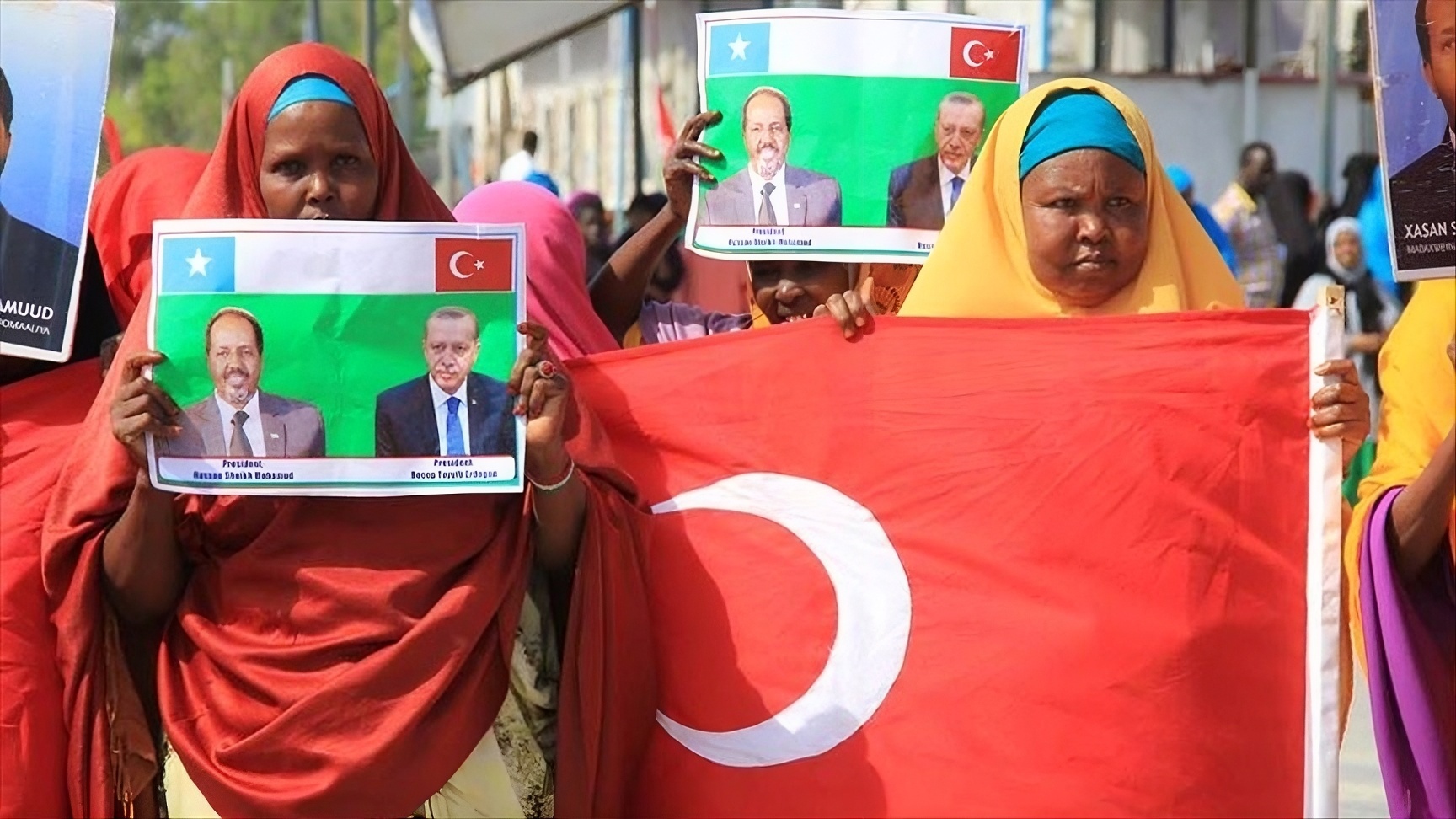
Türkiye’s relations with Somalia date back to the powerful periods of the Ottoman Empire. The relationship between the Ottoman state and Somalia began in 1517, following the fall of the Mamluk Sultanate, and lasted for nearly four centuries. In the first quarter of the 16th century, the Ottomans established a presence in the region and positioned themselves as a force capable of blocking European colonial ambitions.
The Ottoman interest in Somalia was driven by several factors: the region’s control over the Gulf of Aden and the Bab el-Mandeb Strait, its role as part of the spice and trade routes, its position at the entrance to the Red Sea, and therefore its importance for the security of the Holy Lands. Zeila was incorporated into Ottoman territory by Özdemir Pasha in 1559 and became a sanjak center within the Eyalet of Habesh established by Osman Pasha. The northern region of Somalia, including Zeila, Berbera, Bulhar and other coastal cities, remained part of the Ottoman state until its final periods; this rule only came to an end in 1916.
Today, Somalia often appears on the world map through reports of famine, civil war and piracy. Yet these lands at the tip of the Horn of Africa carry the same strategic value today as they did in the Ottoman era. At the intersection of the Gulf of Aden and the Bab el-Mandeb Strait, Türkiye is returning to the stage five centuries later.
Türkiye’s Largest Overseas Base and the Strategic Importance of the Gulf of Aden
The TÜRKSOM Military Training Base, which became operational in 2017, is Türkiye’s largest military base abroad. It is not merely a training center; it is also a strategic foothold. The units that form the backbone of the Somali army, especially the Gorgor commandos, are trained at TÜRKSOM.
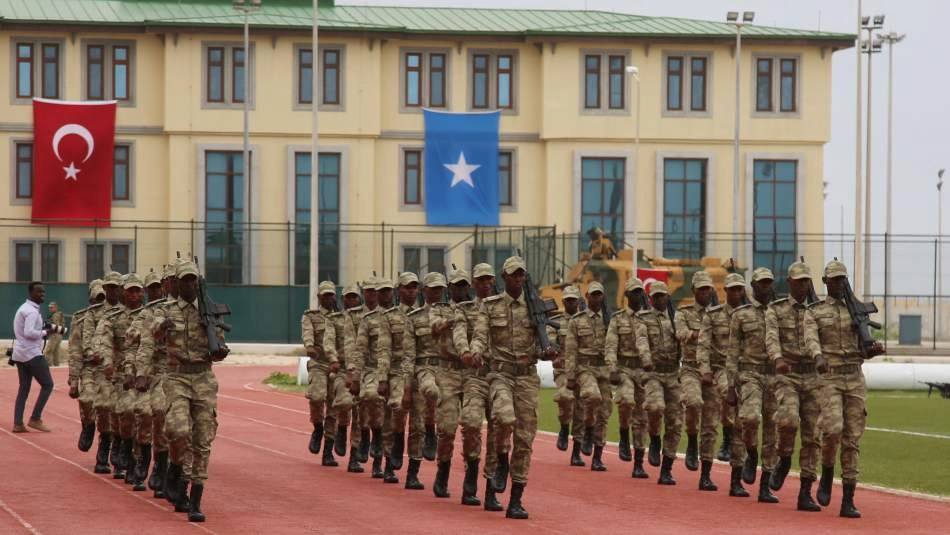
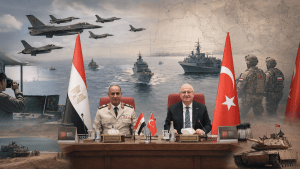
Under the ten-year Defense and Economic Cooperation Framework Agreement signed in 2024, the Turkish Navy has also assumed responsibility for the security of Somalia’s territorial waters.
Türkiye’s role is also being felt in Somali airspace. Following reports that F-16s had been deployed to Somalia, Türkiye’s Ministry of National Defense announced that the Air Component Command in Somalia had been reinforced with new assignments. Somalia’s justice minister also welcomed the presence of Turkish fighter jets in the country’s skies.
So why Somalia? The main reason is the same today as it was in the past: geography. This route, which provides access to the Bab el-Mandeb Strait, is a strategic component of the Asia-Europe trade corridor and hosts around 12 percent of global trade, worth nearly $5 trillion. In the 16th century, the Ottomans came to this region to protect the spice routes. Today, Türkiye is returning to exert influence over maritime trade. In other words, from history to the present day, the strategy has not changed; only the instruments have.
Çağrı Bey and the Anatomy of Türkiye’s Oil Move
Türkiye’s presence in Somalia is not limited to defense.
Türkiye’s deep-sea drilling vessel Çağrı Bey arrived in Mogadishu in April 2026 after a 53-day journey and began drilling operations at the Curad-1 well off the coast of Somalia. This marks Türkiye’s first deep-sea drilling operation outside its own territorial waters. According to U.S. government reports, Somalia may hold close to 30 billion barrels of potential oil and natural gas reserves.
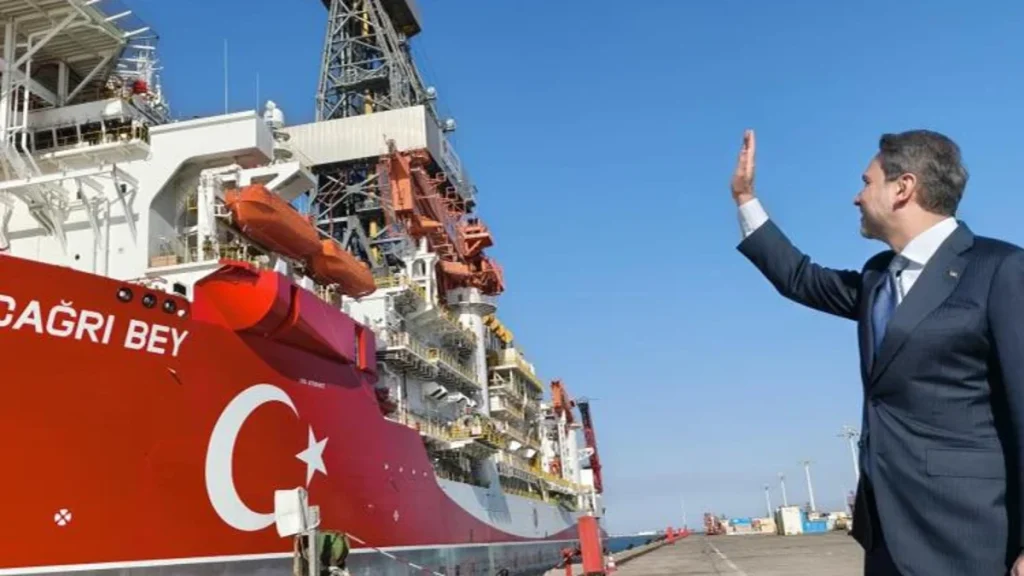
Under the agreement between the two countries, Türkiye will contribute to the development of Somalia’s maritime resources and support oil extraction in return for protecting Somalia’s territorial waters for ten years.
In other words, security and energy have been designed as two mutually reinforcing pillars. For Türkiye, a country structurally dependent on energy imports, this equation means both controlling maritime routes and extracting the resources beneath them.
Just as the security of spice and trade routes was a strategic priority in the Ottoman era, energy security is equally important today. The centuries have changed, but the value of this gateway to the Indian Ocean has not.
Spaceport and Missile Testing: Somalia’s Equatorial Advantage
After energy and defense, a third dimension has now entered the picture. In December 2025, during a press conference in Istanbul with his Somali counterpart, President Erdoğan announced that construction had begun on a space base in Somalia. Türkiye’s Ministry of National Defense referred to the facility as a “spaceport and test launch area.”
Somalia’s location near the equator provides a critical advantage for long-range rocket and space projects. Since the Earth’s rotational speed reaches its highest level near the equator, eastward launches from this region give rocket systems additional velocity. This reduces fuel consumption and increases payload capacity. Just as France uses French Guiana, Russia uses Baikonur in Kazakhstan, and Italy uses its facility in Kenya, Türkiye is choosing Somalia out of geographical necessity.
According to Bloomberg, citing sources familiar with the matter, the first test launch of YILDIRIMHAN is planned to take place from this space base in Somalia toward the Indian Ocean, at the earliest by the end of 2026. It is not unprecedented for a country seeking to enter the intercontinental ballistic missile club to use another country’s territory as a test site. But this choice once again reveals the strategic weight Somalia carries for Türkiye.
Ankara’s Chessboard in the Horn of Africa: Israel, Ethiopia and Somaliland
The development that added the most striking geopolitical dimension to this picture took place in December 2025. Israel recognized Somaliland, which had unilaterally declared its separation from Somalia, as an independent state, becoming the first country to do so.
To understand the background of this move, one needs to go back a little. In 2024, Ethiopia, in search of access to the sea, signed a memorandum with Somaliland that included a form of recognition. This step triggered a strong reaction in Mogadishu and brought the two countries to the brink of war. It was Erdoğan who ended the crisis. During talks held in Ankara on December 11, 2024, Somalia’s territorial integrity was reaffirmed, and it was agreed that Ethiopia’s demand for access to the sea would be addressed through mutually beneficial cooperation models.
Israel’s recognition of Somaliland directly targeted this fragile balance and indirectly undermined the Ankara Process led by Türkiye between Somalia and Ethiopia. Ankara’s reaction was firm: the spokesperson of Türkiye’s Ministry of Foreign Affairs described Israel’s move as “a new example of the Netanyahu government’s unlawful actions aimed at creating instability at the regional and global levels.”
Looking at the bigger picture, one conclusion becomes clear: the more Türkiye takes root in Somalia, the more uncomfortable Israel becomes. Indeed, in an opinion piece published in Israel Hayom, Israeli analyst Shay Gal placed Türkiye’s missile and space infrastructure in Somalia within a broader framework, arguing that Ankara is developing nuclear threshold capabilities. Although speculative, this assessment reveals the scale of the concerns in Tel Aviv.
One historical detail is worth noting: during the Ottoman period, when the Portuguese colonial empire sought to dominate the Somali coast, the local population organizing resistance in the region reportedly said, “Leave this place! We are loyal to the Sultan in Istanbul, to the Caliph.” Today, in the face of Israel’s Somaliland move, it is once again Ankara that stands by Mogadishu. In short, even if the actors have changed, Türkiye’s role in this geography has remained the same.
Ultimately, Somalia plays multiple roles in Türkiye’s global strategy: its largest overseas military base, its first deep-sea drilling field, its first spaceport, its ballistic missile test corridor, and the strategic center of its Africa outreach. The journey that began with humanitarian aid in 2011 has now evolved into a multi-layered great-power strategy. Yet from a broader perspective, this journey in fact began in 1559. Since the day the Ottomans set foot in Zeila, one thing has remained unchanged: the strategic value of the axis stretching from Mogadishu to the Indian Ocean.