
One of the most widely debated questions in the aftermath of the war between Iran and Israel was this: Who is the real winner of the conflict?
The answer is not as straightforward as it may seem. The outcome of wars is not always decided on the battlefield. Sometimes, the real winner is not the side that launches the missiles or conducts the airstrikes, but the actor that remains at the negotiating table once the fighting ends, can engage with all parties, and succeeds in securing a stronger position within the emerging regional order.
From this perspective, it would not be an exaggeration to say that Türkiye has emerged as one of the most significant beneficiaries of the Iran-Israel war.
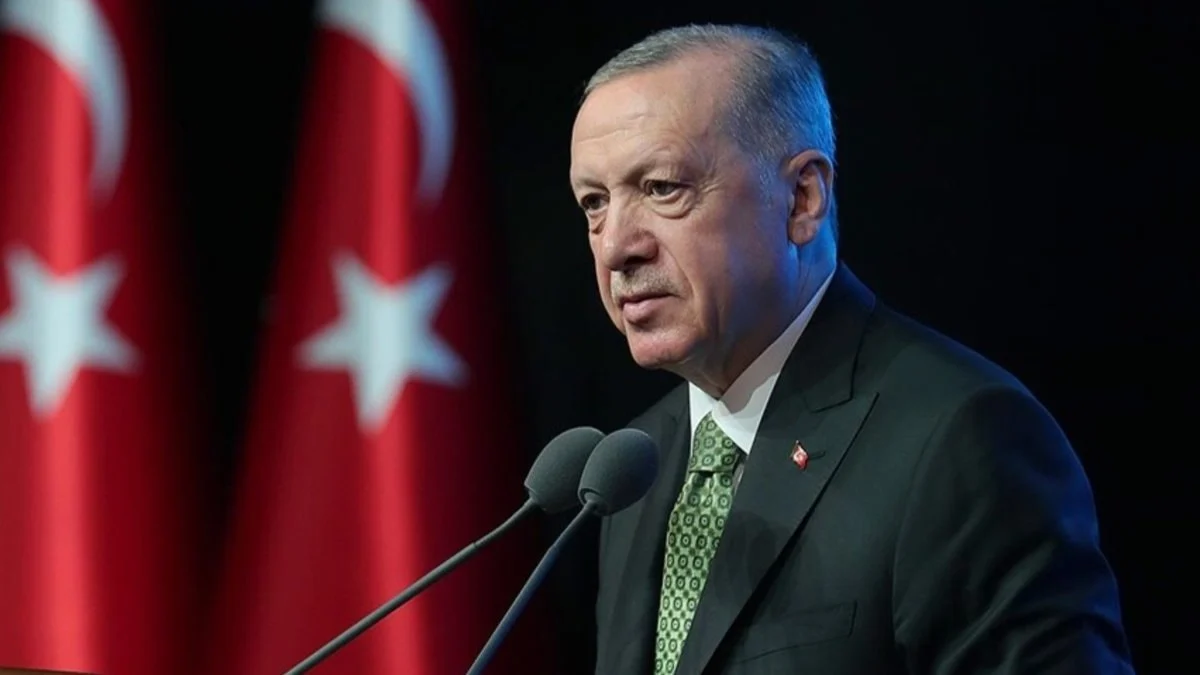
Indeed, The Telegraph reached a similar conclusion, arguing that the real winner of the war was Türkiye and President Erdoğan. This assessment points to an important reality: for quite some time, Türkiye has been quietly but steadily reshaping its position within the regional balance of power.
Ankara’s conduct throughout the conflict offers perhaps the clearest illustration of this strategy. Türkiye managed to keep communication channels open with both the United States and Iran. President Erdoğan became one of the few leaders to receive public expressions of gratitude from both Donald Trump and Iranian President Masoud Pezeshkian.
That fact alone is remarkable.
In a region as deeply polarized as the Middle East, maintaining dialogue simultaneously with two opposing actors is no easy task. Yet Türkiye succeeded in doing precisely that. On one side stands the United States, its NATO ally. On the other stands Iran, Türkiye’s neighbor, an important energy supplier, and a historical rival.
Ankara’s ability to preserve relations with both countries demonstrates why Türkiye has become an indispensable diplomatic actor during times of crisis.
The relationship between Türkiye and Iran is itself a fascinating example of geopolitical balance. The two countries have been regional rivals for centuries. Yet despite their competition, their borders have remained largely unchanged since the Treaty of Qasr-e Shirin in 1639. They represent two ancient state traditions that have learned how to compete intensely without seeking to destroy one another.
Today, however, this historical rivalry may be entering a new phase.
The weakening of Iran and its regional proxies is creating a significant strategic vacuum across the Middle East. The question is: who will fill that vacuum? In my view, the strongest answer is Türkiye.
This is because Türkiye possesses not only military power, but also the diplomatic networks, economic capacity, geographic position, and defense industrial capabilities necessary to become the dominant power in the emerging regional order. As Iran’s influence recedes, Türkiye’s strategic space expands.
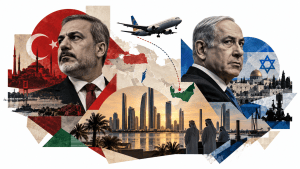
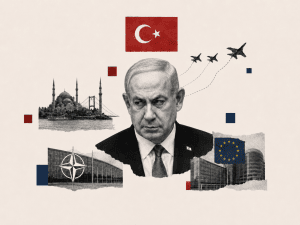
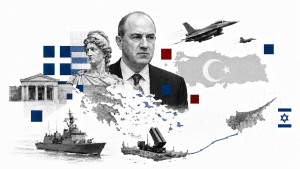
Of course, Israel remains Türkiye’s principal competitor in this evolving landscape. Yet the recent war also exposed the limits of Israeli influence. The Israeli government failed to exert the level of diplomatic influence it had hoped for in shaping the post-war order. The fact that Israel was largely excluded from critical negotiations between Washington and Tehran was widely interpreted by international observers as a major political setback for Prime Minister Benjamin Netanyahu’s government.
Türkiye, by contrast, strengthened its position precisely because it remained outside the conflict while staying at the center of diplomatic efforts.
Another major consequence of the war has been the shift in the security perceptions of the Gulf states. The targeting of American military facilities in the region revived a question that had long remained unspoken in Gulf capitals: can the United States still guarantee regional security in the way it once did?
Saudi Arabia, Qatar, and other Gulf countries have built their security architecture largely under the American umbrella. However, the recent crisis demonstrated that this umbrella may no longer provide the level of protection it once did. The economic costs of the attacks, disruptions in energy markets, and growing security risks are now pushing these countries to seek alternative security partners.
This is where Türkiye enters the picture.
Türkiye is no longer merely an important diplomatic actor in the region. It is also becoming an increasingly attractive defense partner. Modern Diplomacy recently argued that the Iran war may have transformed Türkiye into the Gulf’s most valuable defense partner.
The numbers support this assessment. In 2016, Türkiye’s defense exports stood at $1.67 billion. By the end of 2026, that figure is expected to exceed $11 billion. This is not simply economic growth; it represents a fundamental transformation of Türkiye’s position within the global defense market.
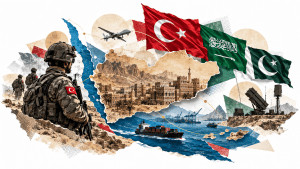
Iraq’s growing interest in Turkish air defense systems, the strategic rapprochement between Türkiye and countries such as Saudi Arabia and Egypt, Indonesia’s agreement to purchase Bayraktar Kızılelma combat drones, and military ship exports to Portugal are all part of the same broader trend.
That trend tells us something important: as confidence in the United States declines, Türkiye is increasingly emerging as an alternative security partner.
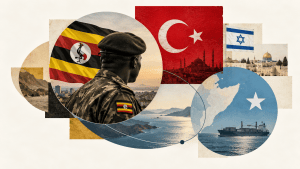
And this phenomenon extends far beyond the Middle East. Today, Türkiye is a key player simultaneously in Ukraine, Libya, Somalia, the Gulf, the Balkans, and the Caucasus. Maintaining influence across such a broad geographical area goes well beyond the traditional definition of a regional power.
The economic consequences of the war have also increased Türkiye’s strategic importance. The mere possibility of the Strait of Hormuz being closed demonstrated just how vulnerable global trade remains. Energy corridors and trade routes are no longer merely economic issues; they have become fundamental geopolitical security concerns.
In this context, Türkiye’s geographic position becomes especially significant. Projects such as the Middle Corridor, the Development Road initiative, and the potential revival of the Hejaz Railway could place Türkiye at the center of the new trade and energy routes connecting Europe, the Middle East, and Asia.
The emergence of a new political reality in Syria could further strengthen Türkiye’s role in regional logistics networks. From the Gulf to Europe, and from Central Asia to the Mediterranean, Ankara is increasingly becoming an indispensable geopolitical crossroads.
This is why I find The Telegraph’s assessment of Erdoğan particularly compelling: Erdoğan is leveraging the fragmentation of the international order to strengthen Türkiye’s strategic position. The war in Ukraine, declining confidence in the United States, the transformation of the Middle Eastern security architecture, and the weakening of Iran are all creating new opportunities for Ankara.
Of course, these developments do not present opportunities alone. They also involve significant risks. A weakened Iran could generate new regional tensions. Competition with Israel may intensify. Syria, Iraq, and the Gulf could all become arenas for future geopolitical confrontation.
Yet one thing seems increasingly clear: Türkiye is no longer a country observing events from the sidelines. It now sits at the center of crises, negotiations, trade routes, and emerging security architectures.
In my view, that may be the most important lesson of the Iran war.
As the old Middle East gives way to a new regional order, the question of who will shape that future becomes increasingly important. Iran is losing influence. Israel is becoming more isolated. America’s security guarantees are being questioned. The Gulf states are searching for new partners.
And in this new landscape, it may well be that the story of the new Middle East is being written, far more than we realize, in Ankara.