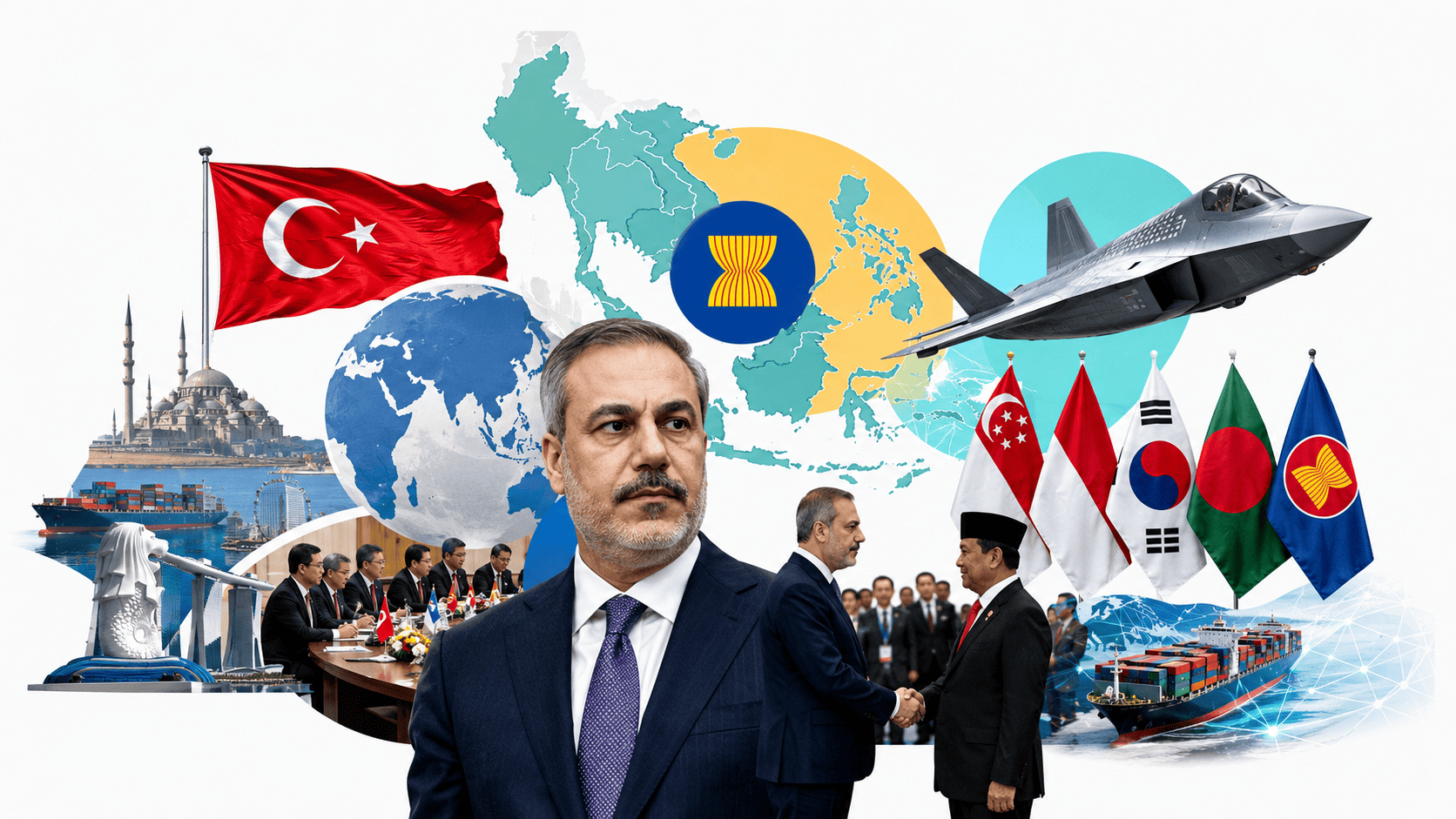

Foreign Minister Hakan Fidan’s Southeast Asia tour last month, covering Singapore, Indonesia, South Korea and Bangladesh, showed that Türkiye was seeking to build a more lasting and multidimensional policy in the region. Immediately after these contacts, Türkiye’s acceptance this month by ASEAN as a Dialogue Partner demonstrated that the diplomacy being pursued had turned into a concrete outcome.
Türkiye had been a Sectoral Dialogue Partner of ASEAN since 2017. Its elevation to Dialogue Partner status means that relations are being moved to a more comprehensive and institutional level. Ankara is thus gaining the opportunity to build stronger ties with one of the fastest-growing regions of the world economy, with a population of around 700 million, not only through trade but also through diplomacy, security, technology and the defense industry.
Each of the countries visited by Fidan has a different place in this strategy. Singapore is an important hub in terms of finance, logistics and technology. South Korea is a strong manufacturing country with which Türkiye can diversify its industrial and high-technology partnerships. Indonesia is ASEAN’s most populous country and one of the region’s political centers of gravity. Bangladesh, with its large population, growing economy and strategic location in South Asia, is also among the countries with which Ankara wants to develop relations.
The defense industry forms the most striking pillar of this opening. The agreement between Türkiye and Indonesia for the export of 48 KAAN fighter jets carries a meaning far beyond an ordinary sale. Indonesia became the first foreign customer for Türkiye’s fifth-generation fighter aircraft, which is still under development. The agreement, which also includes technology sharing, joint production and long-term industrial cooperation, shows that Türkiye is not merely a country that sells defense products. Ankara is now also playing a direct role in helping its partners develop their own defense capabilities.
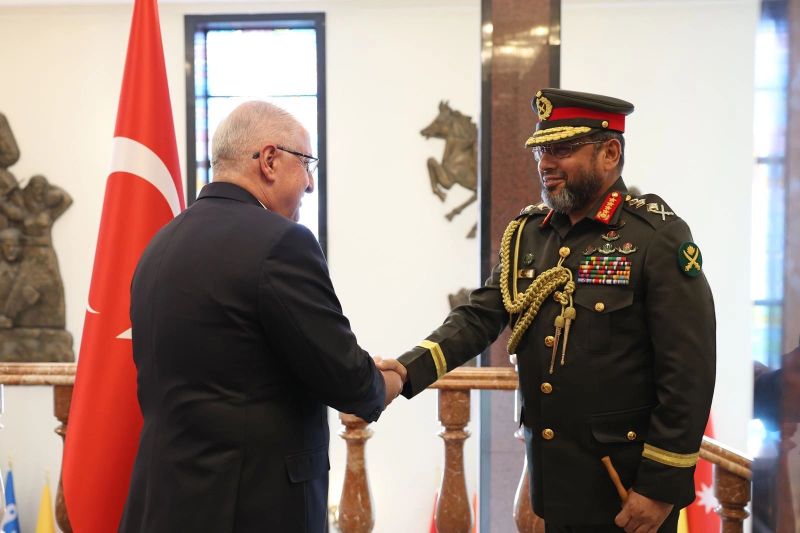
The five-day official visit to Türkiye by General Waker-Uz-Zaman, Chief of Army Staff of Bangladesh, is another part of this picture. In the contacts of Waker-Uz-Zaman, who was received by Minister of National Defence Yaşar Güler, military training, technology sharing, artillery systems, unmanned aerial vehicles and Turkish defense industry facilities came to the fore. India-based The Economic Times assessed the visit not only through Türkiye-Bangladesh relations, but also within the framework of a broader defense cooperation developing between Ankara, Islamabad and Dhaka. This interpretation shows that Türkiye is building a new field of military diplomacy stretching from Pakistan to Bangladesh.
When all these developments are read together, the picture that emerges is quite clear: Türkiye does not want to conduct its foreign policy solely in relation to Europe, the United States or its partners within NATO. While preserving its relations with the West, it is trying to diversify its allies, markets and sources of technology by building strong partnerships in Asia as well. Because relying too heavily on a single power center restricts Türkiye’s room for maneuver during times of crisis.
In short, Ankara is positioning itself in the changing world order not as a country forced to choose between two blocs, but as an independent power capable of building partnerships with different regions at the same time.